Mob Morality
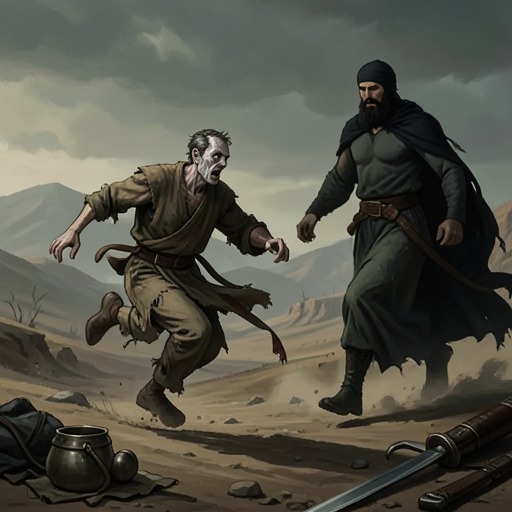
Thus Spoke ZarathustraMob Morality is the moral and political ascendancy of the small, numerous, and conformist: a condition in which the majority’s judgments become standards for everyone. Zarathustra attacks it not merely for favoring the many, but for making their habits of preservation, submission, and ease into measures of goodness. Its danger lies in the authority it claims over value: it can make mediocrity seem like virtue and place the future of humanity under the rule of what is small.
The Rabble as a Mixture
Zarathustra gives the idea a social image when he calls the kingdom of the rabble a “hotchpotch.” The word identifies a mixture in which distinctions have been blurred: saint and scoundrel, gentleman and Jew, and every kind of creature gathered together. The objection is not simply to a particular occupation or rank. In the same speech, Zarathustra calls the healthy peasant the finest type of person alive and says the peasantry should rule. His contrast is between that enduring, self-possessed figure and a rabble defined by indiscriminate mixture, not between nobility and ordinary people as such.
This distinction makes the critique more particular than a general denunciation of popular rule. The peasant represents a recognizable human type; the rabble represents the loss of measure and difference when everything is mixed together. Zarathustra’s language is deliberately severe, and its social ideal is hierarchical: he praises one type as noble and describes the mass as a threat to distinctions of greatness. Mob Morality thus concerns who gets to establish standards, but also what happens when a standard is made to fit everyone indiscriminately.
The Rule of the Little People
The political claim becomes explicit in Zarathustra’s account of the “little people.” He says they have first been granted right and then power, until they teach that only what little people call good is good. Their ascendancy is therefore not just numerical. It is normative: their judgment presents itself as the definition of goodness, rather than as one judgment among others. The crowd’s authority becomes strongest when its own preferences can pass as universal moral truth.
Zarathustra connects this authority to a preacher who sprang from the little people and testified of himself, “I – am the truth”. In his account, that claim has helped raise their pride. The passage makes a pointed connection between moral authority and the power to declare what counts as truth: the little people are not merely following a rule, but learning to regard their own standpoint as the measure of reality. Zarathustra calls the preacher’s teaching an error, and treats the resulting confidence as part of the problem.
Petty Virtues and the Present Order
When Zarathustra addresses the Higher Men, he presents their capacity for contempt and despair as grounds for hope. They have not learned to submit or to practice petty prudence. Against them he sets the masters of the present, who preach submission, acquiescence, prudence, diligence, and consideration. These qualities are presented as a cluster: habits of adjustment and caution that help people preserve themselves within the existing order. Zarathustra’s complaint is not that each word names an obvious vice, but that such small virtues have become ruling principles and crowd out more demanding possibilities.
He makes the conflict concrete by naming the question that governs this morality: how humanity may preserve itself best, longest, and most agreeably. The emphasis falls on duration, safety, and comfort. Zarathustra tells the Higher Men to overcome these masters because they are the Superman’s greatest danger. He presses the argument further by urging them to overcome the “happiness of the greatest number,” along with petty prudences, sand-grain discretion, ant-swarm inanity, and miserable ease. The image of the ant-swarm turns smallness into a collective force: individually modest habits acquire power through their accumulation and their claim to rule.
Honesty and the Threat to the Future
Mob Morality also corrupts the language through which people present themselves. Zarathustra warns that people become false to themselves, disguising what he calls rottenness with clever words, pretended virtues, and glittering deeds. Against this falsification he names honesty as exceptionally valuable and rare. The warning makes the danger inward as well as political: conformity can shape not only public standards but the self-understanding of those who adopt them.
Zarathustra’s final diagnosis is that the present belongs to the mob, which does not know how to distinguish what is great from what is small, straight from crooked, or honest from dishonest. He describes its lying as innocent, making the failure of judgment more disturbing than deliberate deception: the crowd can mislead without recognizing its own distortion. His counsel to the Higher Men is consequently guarded. They should mistrust the present and keep their reasons secret rather than submit to its standards. Mob Morality is the greatest danger to the Superman because it converts the ordinary wish to endure comfortably into a public authority over value, while making the very distinctions needed for a different future appear illegitimate.